LAPU-LAPU CITY, CEBU, PHILIPPINES – The University of the Philippines Cebu Center for Environmental Informatics (UP Cebu CENVI) actively collaborated with the Lapu-Lapu City government for the successful implementation of the fifth iteration of the Andam Lapu-Lapu initiative.
Held on March 16-17, 2026, at the Mini Hoops Dome in Barangay Talima, Olango Island, Lapu-Lapu, Andam Lapu-Lapu sa Olango aimed to strengthen science-based disaster preparedness and climate resilience among island communities. The eleven barangays that make up the Olango Island group were the focus of this second implementation of Andam Lapu-Lapu sa Olango, which brought together members of local people’s organizations (POs), students, fishermen, and barangay responders.
The Andam Lapu-Lapu initiative, inspired by the Department of Science and Technology’s Handa Pilipinas campaign, serves as a platform for communities to engage with science- and technology-driven solutions for Disaster Risk Reduction and Climate Change Adaptation (DRR-CCA). The program’s continuing iterations, such as Andam Lapu-Lapu sa Olango, Andam Lapu-Lapu sa Habagatan, and Andam Lapu-Lapu sa Amihanan, aim to convert national resilience frameworks into locally applicable strategies that strengthen communities.
In his opening remarks, Assistant City Administrator and Officer-in-Charge of the Disaster Risk Reduction and Management Office (DRRMO), Dr. Nagiel Bañacia, noted that the past year has presented numerous challenges, including Typhoon Tino and an earthquake. The ongoing global crisis highlights the heightened vulnerability of island communities. He emphasized the importance of utilizing science-based technologies to strengthen resilience.
Rino Dominic Cabungcal, Science Research Specialist and Innovation Hub Manager of Department of Science and Technology Region VII, delivered a keynote presentation on food security for small island communities, where he outlined strategies for strengthening sustainable food systems. He emphasized the role of science and technology in ensuring a stable food supply and highlighted approaches like climate-resilient agriculture and community-based food production methods.
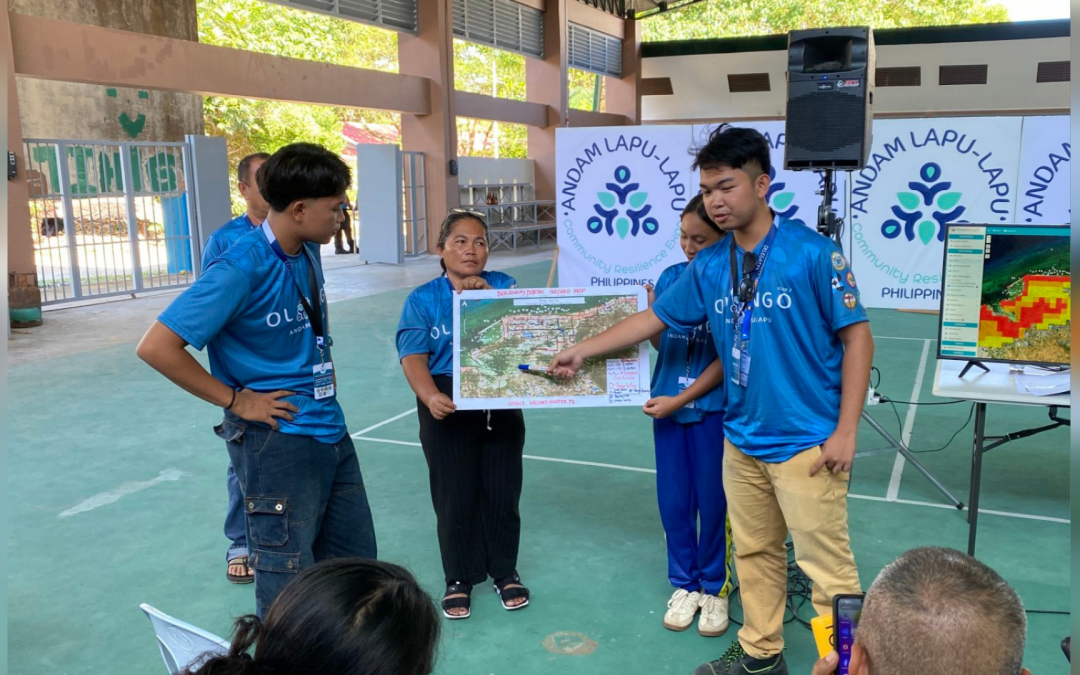
The two-day lecture-workshop series featured five breakout skills training sessions, including Basic Community Profiling, Short-form Documentation, Weather Literacy, How to Read and Make Maps with the Use of Science & Technology Applications, and Rainwater Harvesting Systems. To reinforce practical learning, these lectures were complemented by field-based training activities where participants produced outputs that were assessed by their respective trainers and subject matter experts.
To deepen their understanding of climate change adaptation and community resilience initiatives within Olango Island, participants also engaged in learning exposure visits on the second day of the activity. Delegates visited selected local sites, including the Material Recovery Facility in Sitio Bunga, Barangay Sta. Rosa, where they learned about bamboo propagation; the Olango Island Wildlife Sanctuary in Barangay San Vicente, where they were introduced to mangrove conservation efforts; and the rainwater catchment system of the finalist and of the Grand Winner of the Sawra ang Ulan Contest 2025 (Individual Category) in Barangay San Vicente and Barangay Tingo.
UP Cebu CENVI promotes a science-based approach to disaster preparedness through its ongoing collaboration with local governments and communities by offering technical support, environmental data, and research inputs that guide preparedness, response, and resilience planning.
###