Written by Vince Xyrex Aglosolos, Alyanna Marie Miñoza, & Sofia Yu
Grade 10 students of UP High School Cebu carried out a series of community-based initiatives throughout May 2026 under the Civic Welfare Training Service (CWTS) course, engaging in educational support, disaster preparedness, and environmental sustainability efforts in partner communities.
The initiatives included Project Padayon, a numeracy literacy tutoring program for children in Barangay Capitol Site; Project 3Bs, a disaster relief repacking activity conducted in partnership with the Department of Social Welfare and Development (DSWD) Field Office VII at the Visayas Disaster Resource Center in Mandaue City; and Project KalimpyoHIGH, a community cleanup drive in Barangay Lahug, all under the guidance of Asst. Prof. Fernand Benardez. Through these activities, students applied civic learning through direct engagement with communities and public service institutions.
Strengthening numeracy skills through community tutoring
In partnership with UP Cebu Ugnayan ng Pahinungod, the CWTS 10 class implemented Project Padayon, a four-session numeracy literacy tutoring initiative held every Saturday from May 2 to 23, 2026, in Barangay Capitol Site.
The program engaged children aged 7 to 12 in structured, learner-centered sessions aimed at strengthening foundational numeracy skills and addressing gaps between grade level and actual learning competencies. Prior to implementation, student volunteers underwent orientation sessions facilitated by UP Cebu Ugnayan ng Pahinungod, which introduced adaptive tutoring approaches designed to respond to diverse learning needs.
The sessions followed a progressive structure beginning with learner assessment, followed by targeted instruction aligned with individual learning levels, and concluding with evaluation of progress. Tutors developed individualized lesson plans to ensure that instruction was responsive to each learner’s needs.
Beyond academic development, the initiative fostered active engagement among learners, many of whom participated enthusiastically and requested additional exercises to continue practicing beyond the sessions. The program likewise strengthened rapport between tutors and tutees, highlighting the value of personalized learning support in community-based education.
Learning disaster preparedness through relief repacking
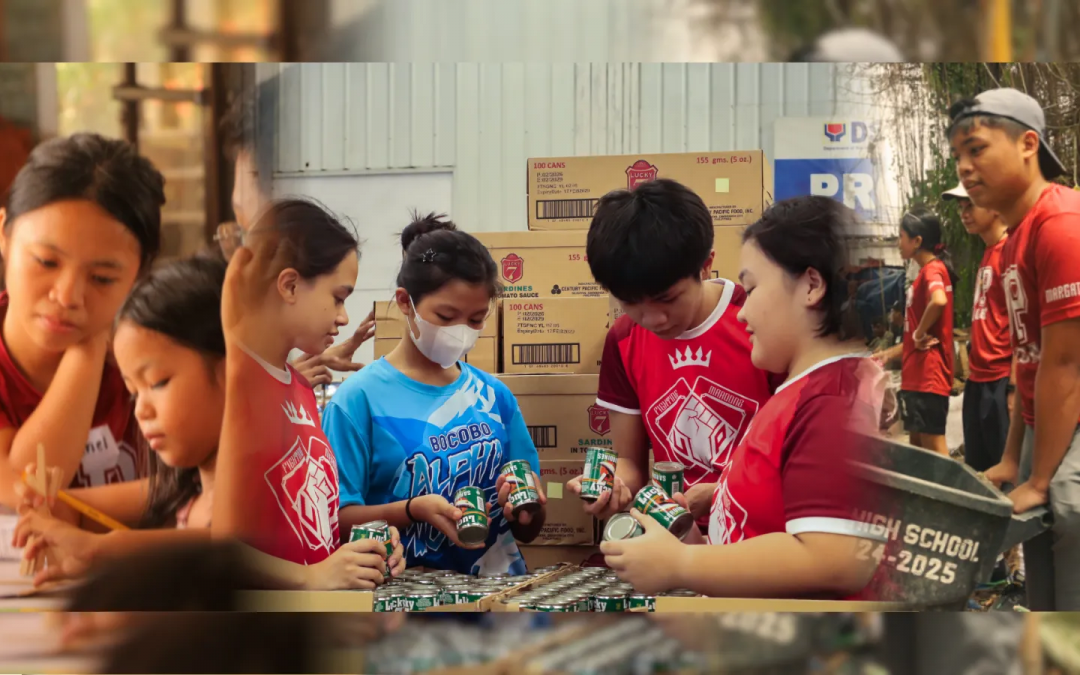
CWTS 10 students participated in disaster relief repacking activities at the Visayas Disaster Resource Center of the Department of Social Welfare and Development Field Office VII in Mandaue City on May 13 and 20, 2026.
Assigned to various stations within the facility, students assisted in preparing family food packs, performing tasks such as assembling boxes, loading items onto automated production lines, and sealing completed relief packages for distribution.
For many students, the experience challenged initial expectations of relief operations. Instead of a small-scale community setup, they encountered a highly organized system composed of designated stations, coordinated workflows, and mechanized processes designed to ensure efficiency and accuracy in production.
Students also noted the scale of operations and the structured guidance provided by personnel on-site, which enabled them to navigate the process effectively despite its complexity.
The activity highlighted the collaborative nature of disaster response, in which volunteers and institutional workers work within a coordinated system to ensure the timely preparation and distribution of relief goods.
The repacking operations form part of the DSWD’s routine preparedness measures during the latter half of the year, a period marked by increased disaster occurrences. The facility likewise welcomes groups and individuals interested in learning about and participating in disaster response initiatives.
Promoting environmental stewardship through community cleanup
CWTS 10 students conducted Project KalimpyoHIGH, a community cleanup drive held on May 30, 2026, in areas surrounding Barangay Lahug.
Following an orientation at UP Cebu, students, together with faculty members, carried out cleanup activities along Sunset Drive, J. Solon Drive, and nearby sections of Gorordo Avenue.
The activity involved the collection of various waste materials, including plastics, dried leaves, and overgrown vegetation along sidewalks, roadside areas, and irrigation canals. Collected waste was properly segregated into biodegradable and non-biodegradable categories to reinforce responsible waste management practices.
The cleanup resulted in improved conditions in key public spaces, including cleared irrigation canals and reduced litter along pedestrian pathways and road shoulders.
Through Project KalimpyoHIGH, students demonstrated how environmental responsibility can be advanced through collective action, translating awareness into direct contributions to community upkeep and sustainability.
Shared impact, civic formation
Across all initiatives, CWTS 10 students demonstrated core values of service, responsibility, and teamwork through sustained engagement with partner communities. The projects reflected the integration of classroom learning with real-world application, allowing students to translate civic education into meaningful action in diverse community contexts.
Collaboration was central to the implementation of all activities, involving coordination among students, faculty members, school officials, local government units, and partner institutions such as UP Cebu Ugnayan ng Pahinungod and the Department of Social Welfare and Development Field Office VII. These multi-sector partnerships reflected participatory approaches to community engagement and strengthened the effectiveness of each initiative.
The projects likewise underscored adaptability and responsiveness to community needs, as students applied lessons in community development, project planning, and service-oriented engagement within actual field conditions. They demonstrated sustained commitment and accountability as students worked within structured timelines while practicing teamwork, discipline, and coordination.
Collectively, the CWTS 10 initiatives highlight how service-learning shapes civic awareness and responsibility among students, reinforcing the role of education in fostering active participation in community development and public service.
University of the Philippines Cebu
Lahug: Gorordo Avenue, Cebu City 6000
SRP: South Road Properties, Cebu City 6000
[email protected] (032) 232 8187
Policy
P Cebu Citizen's Charter
NPC Rgistration
Data Privacy
Branding & Trademark Guide
Copyright All Rights Reserved © 2024