
Text by Eunice Iglesias | Photo by Alex Alfonso
What does it truly mean for a university to grow? For the University of the Philippines Cebu, a decade of self-governance proves that progress extends beyond tangible milestones such as improved facilities, expanded academic programs, and rising enrollment. Rather, it is reflected in lives transformed, critical knowledge produced, communities served, and possibilities opened for future generations.
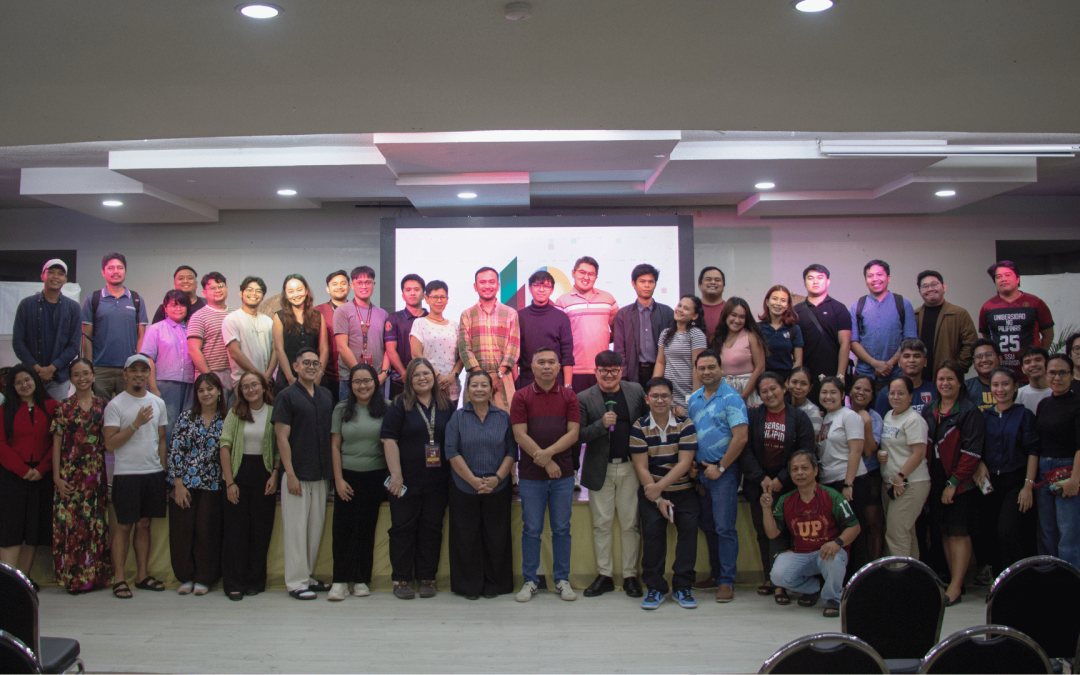
On October 27, 2026, UP Cebu officially kicked off its 10th constituent university anniversary with a unit-wide fellowship at the Performing Arts Hall, bringing together faculty members and administrative personnel.
The event marked the beginning of a yearlong commemoration running from October 2026 to October 2027. Among the key activities announced was the call for nominations for the Gawad Tsanselor 2026, introduced by search committee representative Jeruel Roa.
Carrying the theme Paglig-on: Creating Futures, Transforming Worlds (Kaugmaon ang Tukoron, Kalibutan ang Bag-uhon), the milestone draws on the university’s more than century-long history while looking toward its evolving role in Cebu, the Visayas, and the country.
In her opening remarks, Vice Chancellor for Academic Affairs Asst. Prof. Palmy Marinel P. Tudtud framed the university’s separation from UP Visayas as more than an administrative transition. Rather, she described it as a defining leap toward self-governance, strengthening the university’s capacity for regional responsiveness and social inclusion.
“As we celebrate this milestone, let us renew our commitment to a UP Cebu that is academically excellent, socially responsive, culturally grounded, and globally engaged,” Tudtud urged.
This vision of institutional growth also informed the unveiling of the 10th anniversary logo, presented by Asst. Prof. Jay Nathan T. Jore. Developed by the UP Cebu Design program, the mark combines ascending geometric forms with the distinct colors of the university’s four constituent colleges. Its numeral one represents firm upward movement, while the zero symbolizes unity. Together, they embody a decade of development through creativity, innovation, and service.
Beyond its decade as a constituent university, however, UP Cebu draws on a legacy rooted in its founding on May 3, 1918. Its continued existence has been shaped by generations of faculty members, staff, students, and alumni who upheld the institution through war, threatened closures, and political disruptions.
For Jore, paglig-on, an affirmation of strength and resilience, holds particular significance for UP Cebu. “We aren’t starting over because we are already here. We are making what we have built stronger and more effective,” he stressed.
This sense of shared stewardship resonated in Chancellor Leo B. Malagar’s message, which described UP Cebu as a panimalay or home, not merely defined by its physical spaces, but as a public trust built and sustained by generations. It is a shared responsibility to preserve the university’s legacy and strengthen its foundations for those who will follow.
Reaffirming the university’s public mandate, Malagar stressed that its research, creative works, and academic outputs must remain firmly directed toward addressing critical societal needs.
“We shape the minds that shape the nation; we strengthen the hands that strengthen the nation,” Malagar emphasized.
The gathering concluded with a fellowship dinner and the presentation of a special video featuring pioneer administrators, including inaugural Chancellor Liza Corro, alongside staff members and varsity athletes who have witnessed and helped shape UP Cebu’s institutional journey.
Their recollections and aspirations bridged the university’s past and future, underscoring how the people who carry its mission forward will ultimately define its next chapter.