
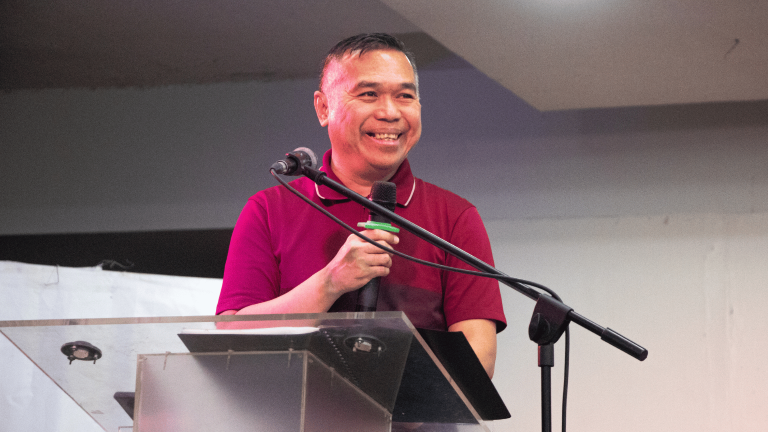
Remarks of Chancellor Leo B. Malagar on the tenth anniversary of UP Cebu as a constituent university
I. Balay nato kini
Maayong gabii kaninyong tanan. Maayong gabii, UP Cebu.
To all our colleagues in UP; our partners in government, industry, and our communities; our alumni and retirees; our faculty, REPS, lecturers, and staff; and our college and high school students: maayong pag-abot. Balay nato kini.
Some of us first entered these gates as students. Others came to teach, to work, or to help this University grow. Our paths were different, but they brought us into the same community.
Here, we learn to ask difficult questions, listen to people who disagree with us, and stand by what we believe is right. Those lessons continue long after graduation.
Daghan kanato dinhi nakakat-on. Ug, usahay, ang uban nakakaplag sa tinood nga gugma.
So forgive us if tonight feels personal. This University has a share in who we are.
And all of us have a share in what it can become.
That is our responsibility: to leave this home stronger for those who come after us. That is our theme tonight: Paglig-on. The work of strengthening.
Ang paglig-on dili pagpatig-a sa kasingkasing.
We strengthen our foundations. We keep our minds open. We take better care of one another. And we build a university that can do more for the people who need it.
II. The people who kept this University alive
Tonight, we mark ten years as a constituent university. Our roots reach back one hundred and eight (108) years.
On May 3, 1918, the Board of Regents approved the establishment of a college in Cebu. Classes opened that July with twenty-eight students and two teachers, in the old Warwick Barracks.
Twenty-eight students. Two teachers. And a community willing to give them a future.
Our late historian, Dr. Madrileña de la Cerna, preserved an image of the college with a caption that speaks to us still: “The school that refused to die.”
A school does not refuse anything. People do.
When closure threatened in the 1920s, Cebuanos defended the college. The province provided land in Lahug and support for its new home. In 1929, the Administration Building was inaugurated.
War closed the college in 1941. Its main building became an internment camp and later a prison for people condemned to die. After the war, classes resumed.
In 1950, it closed again. Dr. de la Cerna’s account links that closure to retaliation against students who challenged powerful politicians. Congress omitted the college’s funding from the national appropriations.
The doors closed. The alumni kept working to reopen them. On July 1, 1963, the college welcomed students again.
In 2010, UP Cebu gained autonomy. On October 27, 2016, we became the eighth constituent university of the University of the Philippines.
Tonight, we celebrate that recognition. We also ask what we have done with the responsibility it brought. The answer must be found in what our students learn, what our people create, and what our communities gain.
Tonight, we honor the generations who brought us here: our former deans, our founding Chancellor, Atty. Liza D. Corro, and the faculty, staff, students, alumni, and partners who built each stage of this journey.
Kay ang unibersidad dili lang bilding. Ang unibersidad mao ang mga tawo nga dili mobiya.
We inherited a University that people fought to keep alive. We owe the next generation a University worth believing in.
III. What we make possible
Our motto gives us three responsibilities: Nurtured to Create. Inspired to Innovate. Destined to Serve.
For half a century, our Fine Arts program has helped artists give form to Cebuano experience. Our College of Communication, Art, and Design helps us see, question, and understand our world.
Our FabLab, established with the DTI in 2016, gives students, designers, and small enterprises tools to develop and test their ideas.
An artist helps us see what we have overlooked. A designer makes things serve people better. A communicator helps us understand issues that affect our lives.
Creativity is serious work.
In our College of Science, Computer Science students developed LakbAI to assess sidewalk accessibility, and drAin to help predict and improve urban drainage. Both projects earned national recognition.
These students found questions worth pursuing in the sidewalks we walk on and the streets that flood. National recognition encourages us to take their ideas further: to test them carefully, work with communities, and make them useful.
That is the promise of a UP education: to look closely at the world and believe we can help improve it.
Our School of Management studies livelihood and public resources. Its research on the Sugbo Negosyo digital card system examined how the technology worked for small business owners served by the program.
That matters. A program may look good in a presentation. We still have to ask whether it works for the people it was meant to help.
Here in Cebu, questions of growth are also questions of fairness. Who finds work? Whose livelihood becomes more secure? Who is still being left behind?
A hub of commerce needs a university with a conscience.
Our College of Social Sciences has strengthened its work in governance through the Center for Good Governance and Development and the Master in Public Affairs program.
We bring evidence into public decisions and people’s experience into the questions we study. That requires careful listening, sound evidence, and the willingness to correct ourselves.
The public sustains this University. Many who help pay for our education will never sit in our classrooms. We owe them work that is honest, excellent, and useful.
Through Pahinungód, our volunteers have helped children at Tejero Elementary School develop their reading comprehension. This May, our high school students spent their Saturdays helping children in Barangay Capitol Site learn numeracy.
Think of the patience that is required. To explain again. To try another example. To stay with a child who is struggling.
Knowledge becomes an offering when we give our time to help someone learn.
That, too, is excellence. And it deserves our pride.
All seventeen of our examinees passed the September Psychometrician Licensure Examination. Two placed ninth in the country. Our high school boys’ football team has been accepted as a guest team in the UAAP Juniors Division.
We thank the teachers, mentors, coaches, and colleagues whose quiet work made these achievements possible. Let us take pride in what our people have done.
To our students: be proud of what you have achieved. Keep asking what you can do with it.
Ang atong katakus adunay kaakibat nga katungdanan.
IV. Standing with one another
Our anniversary also asks us to remember those whose lives were changed by disaster.
On September 30 last year, a magnitude 6.9 earthquake struck northern Cebu. Five weeks later, Typhoon Tino brought devastating floods.
Lives were lost. Homes were damaged or destroyed. Families faced the difficult work of rebuilding.
Tonight, let us honor those who died, stand with those who grieve, and remember everyone still recovering.
Atong hinumdoman ang mga nangamatay, ang mga nawad-an og balay ug panginabuhi, ug ang mga pamilya nga padayon pang nagbangon.
To those still rebuilding: our community must continue to stand with you. Paglig-on means helping one another rise.
Our UP community responded through relief efforts, volunteer work, and psychosocial support. We are grateful to everyone who gave time, resources, and care.
Recovery also asks something of us as a university. We must help communities understand risks, prepare for emergencies, and make decisions that protect lives.
And we must insist on accountability. Public money intended to protect communities must reach that purpose. People deserve honest answers about projects undertaken in their name.
The same responsibility applies within our own University. Our use of public resources must withstand the scrutiny we ask of others.
Paglig-on begins with that honesty.
V. Strengthening the people who carry us
To strengthen this University, we must first tell the truth about what is not yet strong. We cannot ask our people to carry growing responsibilities without giving them the support to do the work well.
Our faculty teach and mentor. Our REPS sustain research and extension. Our lecturers bring knowledge and professional experience. Our administrative personnel keep daily operations moving.
The University depends on your work. You deserve fair treatment, reasonable workloads, and support you can count on.
As our responsibilities grow, staffing and resources must keep pace. Our people must have opportunities to develop their abilities.
Together, we will continue working with the UP central administration to pursue the funded positions and sustained support that UP Cebu needs. We call on our partners in government, our alumni, and our friends to stand with us in this work.
Let us make that case together. Dili kita mohunong.
Our campus development plans include proposed housing projects in Lahug and fuller use of our SRP campus, beginning with the proposed ten-storey CCAD Building and two dormitories. These plans must proceed with the necessary funding, approvals, and safeguards. They must serve a clear academic purpose.
Every new classroom, laboratory, and workspace must come with attention to the people who will teach, learn, and work there.
A student assistant in the clinic or library. A colleague preparing a classroom, processing a request, or keeping our campus safe. A university depends on work that often happens away from the stage.
Tonight, let us give that work the recognition it deserves.
Sa tanan nga nag-atiman sa atong Unibersidad matag adlaw: ang inyong kahago adunay bili. Daghang salamat.
VI. The next ten years
For the next decade, let us take three priorities forward together.
First, strengthen teaching and student support.
Every student should find demanding, thoughtful teaching and a community willing to help them learn. That requires access to materials, guidance, safe spaces, and support when difficulties arise.
A student should be able to ask for help without hesitation.
Second, deepen research and creative work, and strengthen our partnerships with communities.
Our scholars and artists need room for difficult questions, including those whose value takes time to emerge. We must also address urgent concerns within the UP Cebu community: education, livelihoods, public health, the environment, and responsible governance.
Let UP Cebu be a place where decision-makers can seek sound evidence, where Cebu’s histories and cultural resources are preserved, and where communities are heard as partners in producing knowledge.
We must be willing to learn from the people we serve, especially the people of Lahug and Kamputhaw.
Third, give our people the support and resources to keep our promises.
That means adequate staffing, safe facilities, responsible spending, and administrative processes that help people work well. We must support our employees and remain accountable for our service.
These priorities belong together. Good teaching needs supported teachers. Useful research needs time and resources. Public service needs relationships built on trust.
We should judge our progress by people’s experience: students learning, colleagues working with dignity, and communities finding us useful and dependable.
Excellence is how we serve the nation.
“Creating futures” is a large promise. It begins in choices we make every day: a lesson prepared well, evidence checked carefully, a request acted upon fairly, a partnership honored, a person treated with respect.
We transform worlds when what we know helps people live with greater dignity: a child who can read with confidence, a community better prepared for disaster, a family with a fairer chance at a livelihood.
Let the pride we feel tonight stay with us when we return to our classrooms, offices, laboratories, and communities. That is where we will keep this promise.
Each of us can help a colleague do good work. Each of us can give a struggling student a reason to try again. And together, we can build a University where people know their contribution matters.
Magtinabangay kita. Walay gamay nga tahas kon ang atong tumong mao ang pag-alagad.
To our retirees and alumni: thank you for the University you helped build. Your work lives on in the people you taught and served.
To all our personnel: thank you for carrying its work every day. Our responsibility is to build a University that takes care of you, too.
To our students: make this University your own. Question us. Challenge yourselves. Use what you learn with courage and care.
And to the people of Cebu: thank you for helping keep these doors open. Our responsibility reaches beyond them.
Gikan sa Sugbo, para sa Sugbo ug sa nasud.
May the next ten years make us stronger, but never harder.
May we have the courage to face what needs to change, and the generosity to help one another change it.
For one hundred and eight years, people have kept this University alive. They gave us the chance to gather here tonight. Now we must give those who come after us more room to learn, to create, and to serve.
The next ten years are ours to build. Magtinabangay kita.
Mga kaubanan: Kita ang UP Cebu.
Mobarug ta. Magtukod ta. Mag-alagad ta.
We shape the minds that shape the nation. We strengthen the hands that build it.
Lig-on ang UP Cebu. Padayon, alang sa katawhan!
Daghang salamat.